





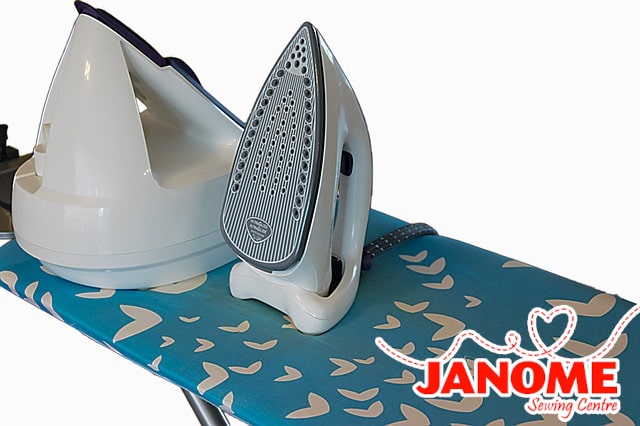
Caring For Your Steam Iron Leave a comment
Tips For Caring For Your Steam Iron
You’ll be im-pressed after getting to know your iron.
 Ironing isn’t just for launderers – sewists and quilters are eager to find the hottest iron on the market to get first-class results. Nowadays you’ll find that almost all irons have steam and spray jets, but can vary in build, capacity and quality. What your new iron’s instructions may not tell you is there are a lot of subtle factors that can affect the lifespan and quality of your iron. Even the cheapest iron can last you years if cared for properly, and the best irons out there will still stumble if left neglected. We’ve put together some useful tips on understanding your Steam Iron and how to care for it – get the most out of your iron!
How hard is your water
While water hardness sounds like an odd term, it plays a significant role in the longevity of your iron. It’s recommended to avoid using tap water if the water in your area is known to be “hard”. Basically, the harder the water, the more mineral build up in the water and steam valves. While it may not be practical to purchase softer water for your iron, there are ways to reduce the mineral build in your iron.
Drain your tank when not in use
At the end of each ironing session, a majority of manufacturers recommend draining the unused water from the iron’s water reservoir. This minimises the sediment build-up for the iron.
Descale your iron regularly
This is a step most iron owners skip, however it is quite important. Much like a coffee machine, over time, the minerals from the water build-up in the pipes and tubes of the iron. This can cause a reduction in the steam pressure and for white sediment to come out of your steam wells. A majority of domestic irons can be descaled with professional descalers or a solution of vinegar and water. Please check with your iron’s manufacturer first, to confirm their recommend method.
Clean your soleplate
As dressmakers and quilters, we are often ironing over basted materials. The result of this is that these adhesives, plastics, and synthetics products melt onto the soleplate of the iron and cause it to ‘grip’ and pull on the fabric as you are using it, which can be frustrating. While this is often unavoidable, there is a solution — a ‘cleaning’ solution. Most irons can be cleaned with a mix of vinegar and baking soda. Applied to a damp, this sticky residue will come out with a light circular motion. Additional, using cotton swap, you will be able to clean the wells. It is important to not use anything that could scratch or remove the protective coating on the iron. Remember, once you are finished to wipe over the soleplate with a clean rag.
Invest in a pressing cloth
Often referred to as a “rajah” cloth, a pressing cloth does more than give you a professionally pressed look on delicate garments, it also protects your iron! It is recommended that if you work with adhesives, that you have a cloth (which can be a proper pressing cloth from a store, or simply a non-staining piece of scrap material) and layer it over the work before you starting ironing.
Conclusion

With a little bit of preventative maintenance, your iron will be pressing cloths, seams, and quilts for years to come.
If you are looking for a new iron, we recommend the Oliso Pro Smart Iron. With an innovative design, the Oliso is more than a ‘standard’ iron, it is a crafting tool that makes ironing a breeze. To learn more about the Oliso Pro Smart Iron, click on the link below.